The Game Plan — $17

Know exactly which moves to make on each of your debts within 90 minutes — even if you have $50K+ across multiple cards.

A 128-page operating manual for the people who got the calculator readout, looked at it, and now need to know what to actually do on Monday morning. Not the book. The condensed playbook you can read in a sitting and start running tomorrow.

$17 Instant dashboard access · 128-page manual · Read in 90 minutes
Get the Game Plan — $17

30-day full refund · From the team behind The Debt Code (4.6★ on Amazon, 18 reviews)

Already took the calculator? Your readout pointed you to specific Parts in this Game Plan.
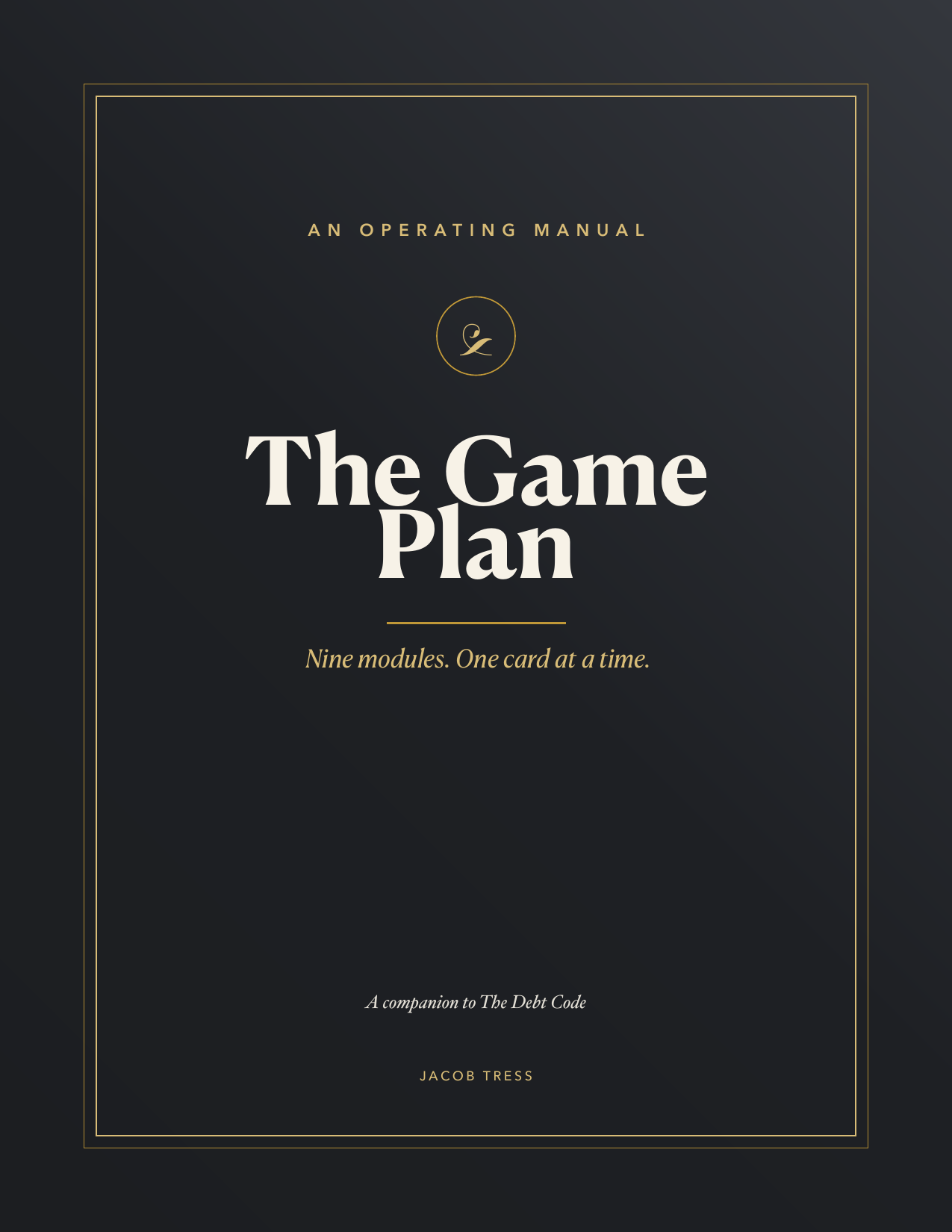
The Game Plan — the operating manual for the debt you're actually in

Read this if you're describing your situation in any of these

This is for you if…

  • Multiple cards in different stages — one current, one 60 days late, one with a collector calling
  • A collector has called or written and you don't know whether to engage or stay quiet
  • You're 60–180 days behind, trying to decide whether to pay, settle, validate, or wait
  • You've been threatened with "legal action" and you can't tell if it's real or theater
  • A real summons just arrived and you have 20–30 days to file an answer (Part VII)
  • $10K–$200K across cards, and you need a coherent plan instead of piecemeal advice

This is NOT for you if…

  • You've already been sued and your court date is in days, not weeks — find a consumer-defense attorney via consumeradvocates.org
  • A default judgment has already been entered against you — that's past the negotiation window; NACA referral is a better path
  • You've already settled and you're rebuilding credit — the 90-Day Credit Rebuild covers your stage, not this
  • You want done-for-you advice — this is self-directed; we don't yet offer DFY

128 pages. 9 Parts. Read top-to-bottom or jump to your stage.

Substance over polish. Built operational, not exhaustive — every Part closes with a specific "Do this today" move.

  1. I

    Mindset: Why You're Not Doomed

    The Freeze Response, the Recovery Curve, and why the fear is almost always bigger than the reality.

  2. II

    The Landscape: Debt's System Mechanics

    Charge-off → collector → debt buyer → maybe lawsuit. Every player, every stage, every transition — and where each of your cards sits in the pipeline.

  3. III

    The Original-Creditor Stage: How the Settlement Window Opens

    Stages 1–2 in operational depth. How creditor willingness builds toward charge-off, what's on the menu pre-charge-off, when to engage and when to wait.

  4. IV

    Collector Economics & The Decoder

    Stage 3 in operational depth. What collectors paid, why settlement is rational from their side, and the five letter types + five phone scripts — decoded.

  5. V

    Validation: The Landscape

    The validation right under FDCPA, the 30-day window, what it actually requires, and why half-prepared DIY attempts burn the move per debt.

  6. VI

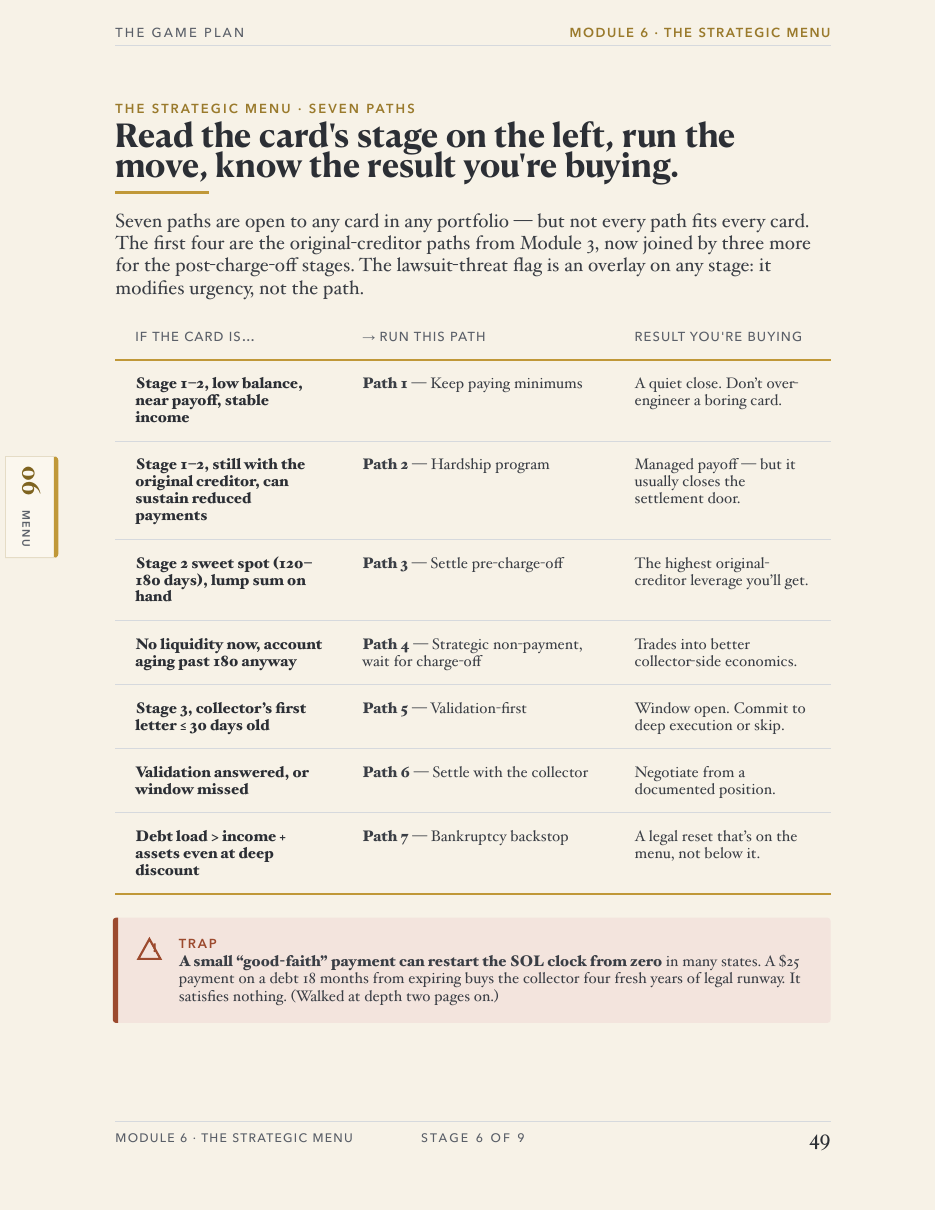
    The Strategic Menu: Choosing a Path for Each Card

    Every path on the table — pay, settle, wait, validate, bankruptcy. Trade-offs by stage and by creditor, run per card not per portfolio.

  7. VII

    Stage 4: When Court Papers Arrive

    Real summons vs. theater. The 14–30 day clock. Filing a pro-se answer, settling from strength, and the Stage 5 post-judgment routing.

  8. VIII

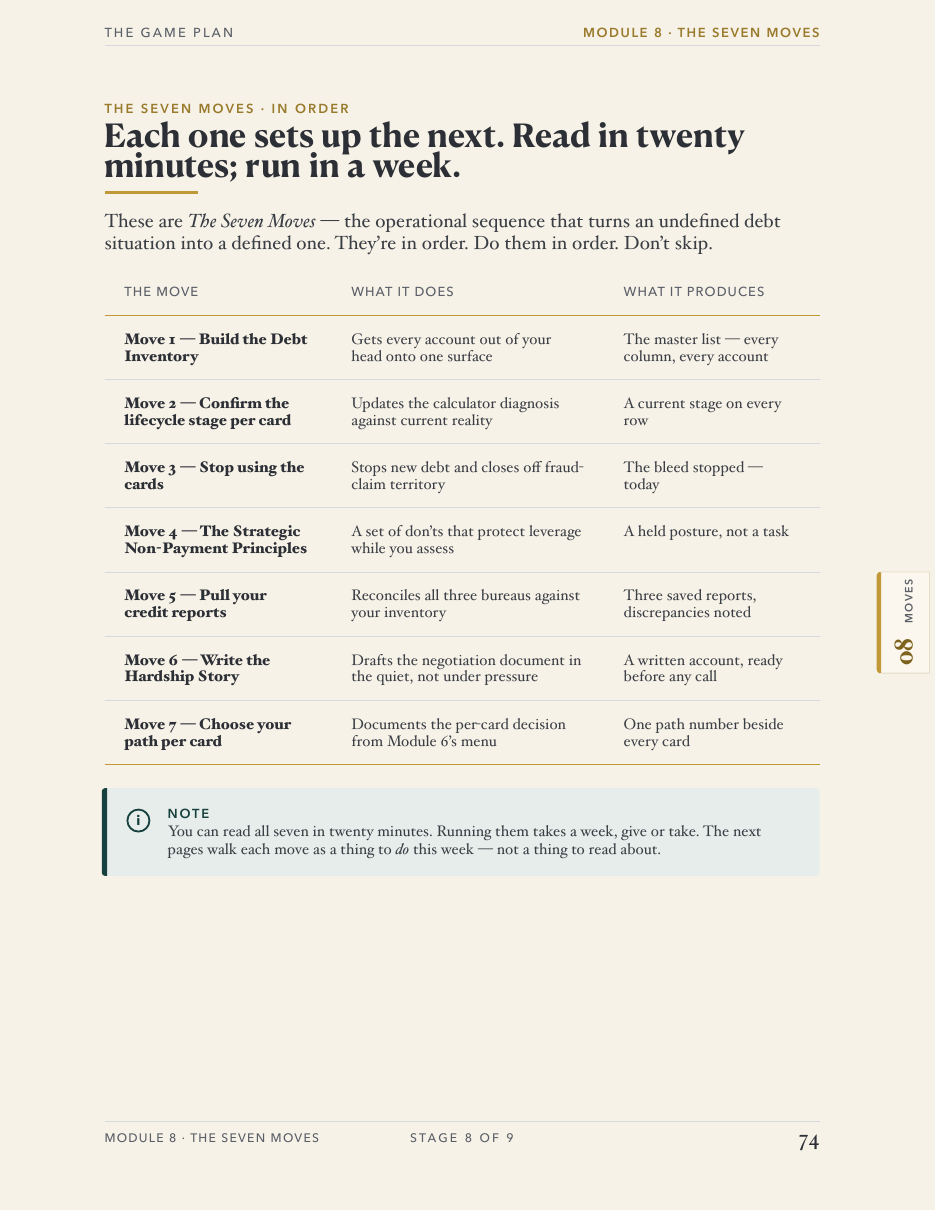
    First Moves: The Operational Close

    The Seven Moves — debt inventory, lifecycle stage, hardship story, choosing your path per card. The list that breaks the freeze.

  9. IX

    Recovery: The Curve, the 1099-C, the End in Sight

    The Recovery Curve year by year. The 1099-C tax surprise and the insolvency exclusion. When bankruptcy is right. The end-in-sight close.

Plus: the Debt Inventory worksheet, used in Part VIII. Yours to keep.

A look inside

Inside the Game Plan — sample page Inside the Game Plan — sample page Inside the Game Plan — sample page

Who wrote this

Jacob Tress had a finance degree, a credit score in the 800s, and $300,000 in credit card debt sitting on statements he couldn't bring himself to open. He's the author of The Debt Code, the book this Game Plan is condensed from. The book is the full narrative. The Game Plan is the operating manual he wishes he'd had on day one. Less story. More moves.

The book it's drawn from

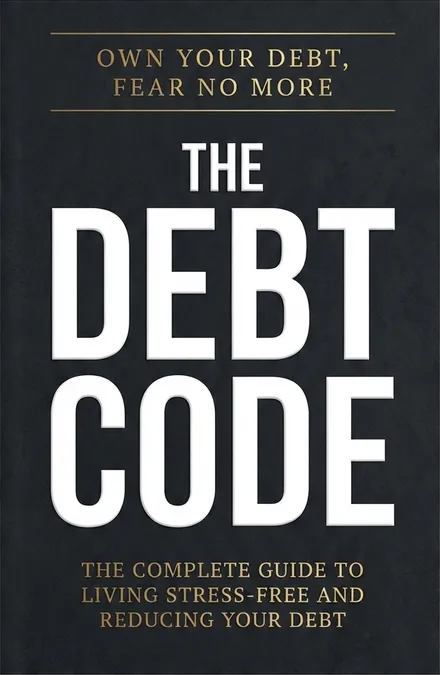
The Debt Code book cover

★★★★★ 4.6 / 5

18 reviews · $14.95 paperback · $7 ebook

Read the book on Amazon →

The book gives you the full story. The Game Plan is what to actually do.

4.6★

Amazon rating, The Debt Code (18 reviews)

$300K+

Author's documented portfolio · the actual playbook he ran. Read the book on Amazon →

128 pages

Read in 90 minutes. Built operational, not exhaustive.

30-day full refund. No questions, no forms, no friction.

Read the Game Plan. Try one move from Part VIII. If it doesn't change how you're thinking about your debt within 30 days, email [email protected] from the address you bought it with. Full refund, same week, no questions. We'd rather have a clean refund than a quiet "this didn't work for me" sitting in someone's head.

FULL REFUND NO QUESTIONS 30 DAY

Get the Game Plan

The Game Plan

128-page operating manual

$17

Instant access via secure member dashboard. 9 Parts. Read in 90 minutes. Run a move tomorrow.

30-day full refund · Secure checkout via Stripe

Something went wrong. Please try again or email [email protected].

Questions

No. The book (about 100 pages on Amazon) is the full narrative. The Game Plan (128 pages) is the operating manual extracted from it — built to read in a sitting and run from on Monday morning. Book is for reading. Game Plan is for doing.
Part VII is your immediate-action chapter: real summons vs. threat letter, the response clock (typically 14–30 days, with 20–30 the common range), filing a pro-se answer, settling from a stronger position once a case is on file. If your court date is within a week, see a consumer-defense attorney first (NACA at consumeradvocates.org) — Part VII tells you what to look for and what to ask.
Parts II, IV, and V are written for you. Part II places your debt in the lifecycle so you know who actually owns it. Part IV walks collector economics and decodes the letters they send and the phone scripts they read from. Part V covers validation — the highest-leverage defensive move at this stage.
The situation around the amount decides, not the amount itself. Get a consumer-defense attorney when the plaintiff is a known-aggressive shop (Midland, Portfolio Recovery, Cavalry, the original creditor in-house); when you have attachable wages, home equity, or a bank account at the same institution holding the debt; when the case is large relative to what they can take; when there's a personal guarantee on a business loan; when you've been sued before; or when the answer-filing deadline is under a week. NACA and county legal aid are no-cost paths. Part VII walks it.
Built for portfolios. Part VI prioritizes by stage and creditor so you're not solving them all at once. The combination of a per-card breakdown and the Strategic Menu is what makes a big portfolio feel manageable instead of impossible.
Yes. The statute-of-limitations data, FDCPA framework, and Part VII (court papers) are US law. International buyers can still use Parts I, III, and V — the landscape, the original-creditor stage, and validation principles travel. The legal-specific sections won't.
No. What you decide to do might — strategic non-payment has a credit cost. Part IX walks the Recovery Curve so you know what that cost looks like in months, not myth. Most people are back to good-credit territory within 2–3 years post-resolution.
30-day full refund. Email [email protected] from the address you bought it with. No forms.

Read it tonight. Run a move tomorrow.

The Game Plan is $17 and unlocks instantly in your member dashboard. If it doesn't change how you're thinking about your debt within 30 days, you get every cent back.

$17

Instant dashboard access · 128-page manual

Get the Game Plan — $17

30-day full refund · Secure checkout via Stripe