A plain-English guide to resolving credit card debt
The Debt Code explains — in clear language — how debt collection actually works, what your legal rights are, and why your situation is more workable than you think. For most people, resolution is not only possible. It's a predictable process.
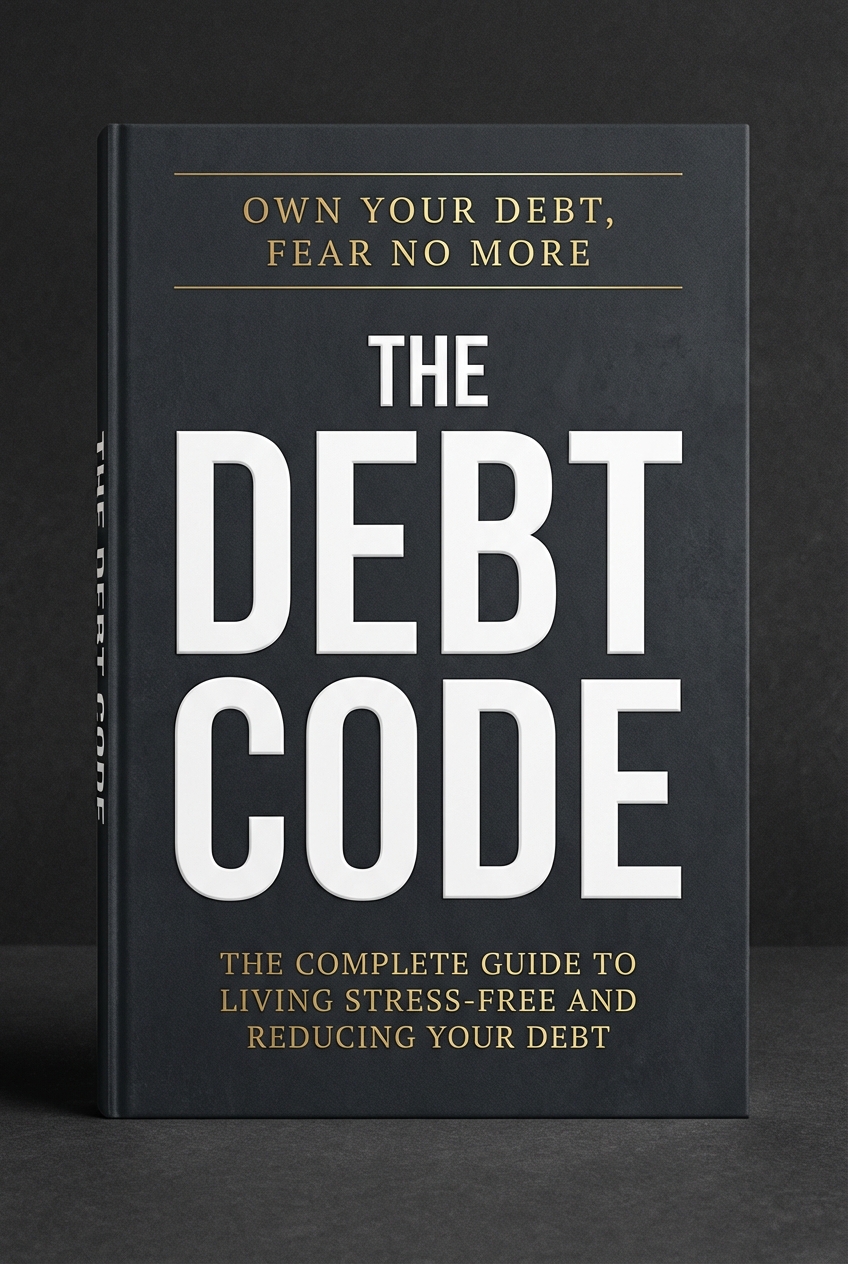
Want the physical copy? Get the paperback for $14.95 →
Instant digital download. 30-day money-back guarantee. No questions asked.
The calls you let go to voicemail. The mail you put face-down on the counter. The number in your head that you're hoping will somehow just... stop being there.
You're not lazy. You're not irresponsible. You're overwhelmed, and you've learned that looking directly at the problem makes everything feel worse — because you don't know what you're actually looking at.
Most people in serious credit card debt have no idea what collectors can actually do to them. So their brain fills the gap with the scariest version. Wage seizure. Arrest. Losing the house. Permanent damage that follows you forever.
That fear is understandable. It's also, in most cases, much bigger than the actual threat.
The debt industry benefits from your confusion. Collectors use urgency and intimidation because those tactics work on people who don't know the rules. The less you understand about how debt collection actually operates, the more leverage they have.
This book is about taking that leverage back.
None of this is a loophole. None of it is a trick. It's how the system actually works — and almost no one in debt knows it.
Credit card companies have sophisticated models that predict exactly how many accounts will go delinquent. They price their products accordingly. When an account goes unpaid, it often gets written off as a tax loss and sold to a debt collector for 2 to 5 cents on the dollar. The original creditor has often already recovered more than you think — and moved on.
When a collection agency buys your debt for pennies, any payment above what they paid is profit. That's why settlement is so common. A collector who paid $900 for a $30,000 account and settles for $9,000 has made ten times their money. Settlements aren't a special favor. They're how the industry makes money.
It's not a secret program you have to find. It's not a last resort for people in crisis. Creditors settle accounts every single day at fractions of the original balance. Knowing when to negotiate, how to approach it, and what to say is the skill. The book walks through all of it.
The damage to your credit is real. It's also temporary and predictable. Chapter 3 of this book maps out exactly what recovery looks like — what happens when, what the numbers typically look like, and what you can do to accelerate it. The path is not a mystery. Millions of people have walked it.
Seven chapters. Concrete information. No fluff, no vague encouragement, no advice that requires you to be a lawyer.
Keep Calm, They Need You More Than You Need Them
Most of the fear around debt comes from not knowing what collectors can actually do — versus what they want you to believe they can do. This chapter separates the two. It also introduces the Negotiation Window: the period during account delinquency when you have the most leverage to settle on favorable terms.
All Bark, No Bite
Banks, collection agencies, and debt collection law firms all behave differently, want different things, and have different incentives. This chapter explains who you're actually dealing with at each stage of the process — and what that means for how you respond.
What Your Future Actually Looks Like
The Recovery Curve: a realistic, month-by-month picture of what happens to your credit score after accounts are resolved. This chapter also covers bankruptcy — what it actually is, when it makes sense, and why most people reading this book don't need it.
The Game Is Rigged in Your Favor
How debt gets bought and sold. Why collectors pay pennies. What the Settlement Sweet Spot is, and how to find it for your specific accounts. This chapter includes real documented settlement examples: a $27,000 Chase account settled for $7,198. A $45,000 Chase balance settled for $18,000. These are not outliers.
Know Your Rights (They're Hoping You Won't)
The Fair Debt Collection Practices Act gives you legally enforceable rights most people in debt have never heard of. This chapter covers: what collectors are prohibited from doing, how to send a debt validation letter, how a cease and desist works, and what happens when collectors violate the law. Real enforcement cases are included.
Your First Moves
Seven concrete steps to take now, regardless of where you are in the process. Includes how to build your Debt Inventory, how Strategic Non-Payment works, how to open contact with a creditor, and how to structure a settlement offer. Specific, sequential, and actionable.
Life After the Debt
What financial freedom actually feels like after years of avoidance and anxiety. Practical steps for rebuilding credit. And an honest look at what this author calls the Debt Identity: the way living in debt can become part of how you see yourself, and how to leave it behind.
This book doesn't traffic in vague promises. Here's what actually happened.
$27,000 Chase balance → Settled for $7,198
That's 26 cents on the dollar. The account was delinquent. The creditor wanted something rather than nothing. The debtor made a lump-sum offer. This is how settlements work.
$45,000 Chase balance → Settled for $18,000
Forty cents on the dollar. A large balance, a willing creditor, and a negotiation that followed a straightforward process. Not a lawyer. Not a debt settlement company taking 25% of enrolled debt. A negotiation.
JPL Recovery Solutions told a consumer they could be arrested for an unpaid debt
They cannot. Threatening arrest for credit card debt is illegal under the FDCPA. JPL was sued. They lost. The consumer received damages. Chapter 5 covers exactly what collectors are prohibited from saying and what you can do when they say it anyway.
Encore Capital, one of the largest debt buyers, was sued when it couldn't prove it owned the debt
Debt gets bought, sold, and transferred. Records get lost. Collectors sometimes attempt to collect on accounts they cannot verify. You have the right to demand validation. Chapter 5 explains how to use it.
Most Popular
The Debt Code: Ebook
Instant digital download. Read it tonight.
Compatible with any device — phone, tablet, laptop, or e-reader.
Add On — Special Offer
30-day money-back guarantee. No questions asked.
The Debt Code: Paperback
Ships via Lulu Direct print-on-demand.
A physical copy you can write in, flag, and return to.
Ships within a few business days.
Both versions contain identical content. If you want to start reading immediately, get the ebook. If you prefer a physical copy, the paperback ships within a few business days.
If you read this book and don't find it useful, email me and I'll refund you in full. No form to fill out. No questions to answer. No hoops.
The ebook is $7. The paperback is $14.95. Neither price should be a barrier to finding out whether your situation is as fixed as it feels.
I'm confident in the information in this book. If you're not satisfied, I don't want your money.
You've been carrying this longer than you should have had to. Not because you're irresponsible. Because no one explained the rules, and the people who benefit from your confusion have every reason to keep it that way.
Banks settle accounts every day. Collectors have legal limits on what they can do and say. Credit recovers on a predictable timeline. The path forward is a process, not a miracle.
The book is $7. It takes a few hours to read. And the information in it is the same information people pay debt settlement companies thousands of dollars to act on their behalf — except you'll understand it well enough to act for yourself.
30-day money-back guarantee. No questions asked.